
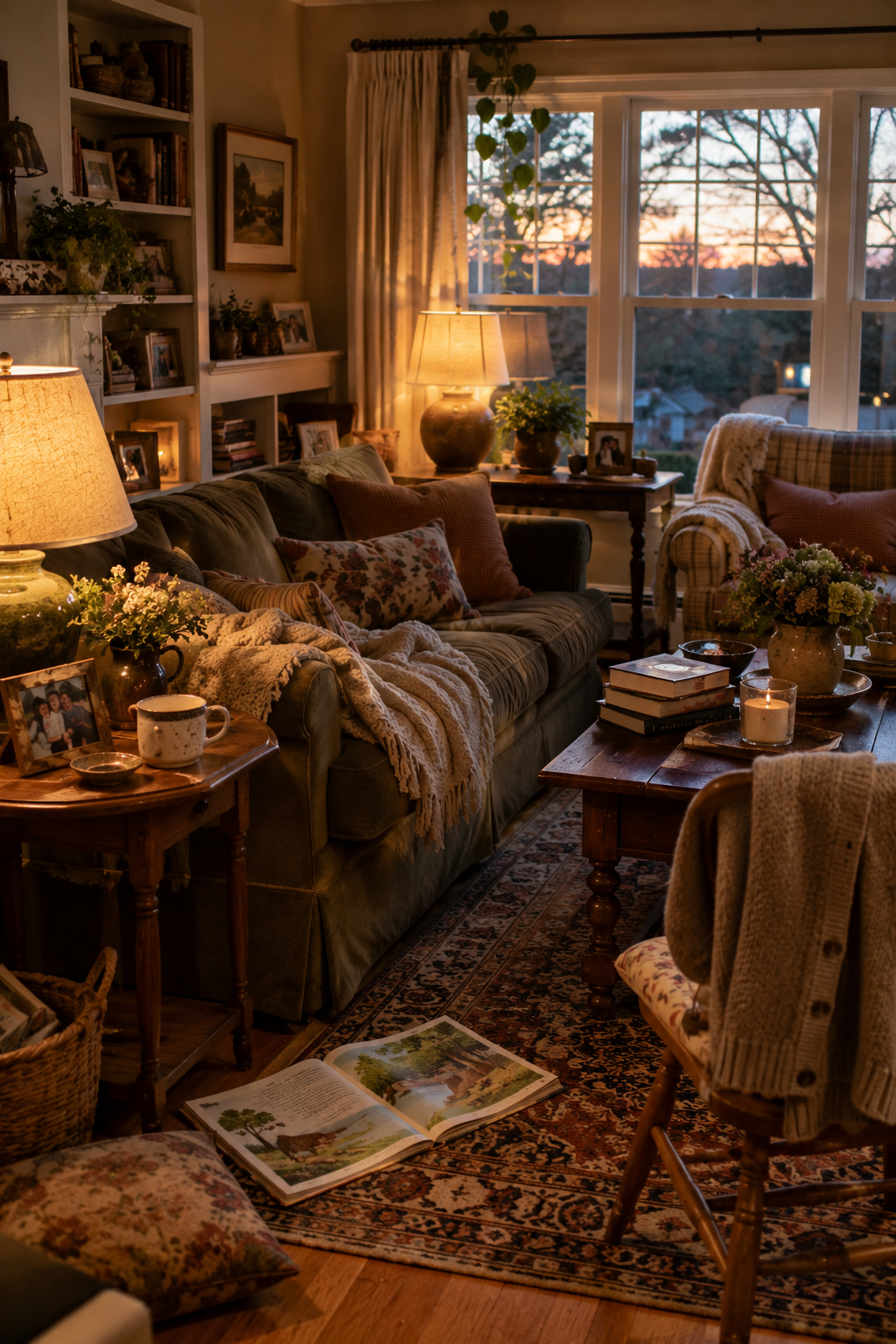
Apparently we have finally remembered that homes are supposed to be comfortable.
For a while there, the ideal home appeared to contain approximately three objects.
A boucle chair nobody was allowed to eat near.
A very large beige vase.
And a coffee-table book positioned at an angle suggesting someone had just been reading it, although nobody had.
But a change is happening.
And it’s called Cozymaxxing.
Yes, that is genuinely what we are calling it.
And underneath the mildly embarrassing name is a rather lovely idea: make your home as comfortable as possible.
Pinterest’s 2026 trend research points to a much wider appetite for comfort, nostalgia and small everyday rituals, while interiors are moving towards warmer colours, softer furniture and rooms that feel increasingly personal and lived in.
In other words, we would quite like our houses to feel nice again.
Comfort is having a comeback
Cozymaxxing is less about following a decorating style and more about asking a surprisingly sensible question:
Do I actually enjoy being in this room?
Not: Does the rug photograph well?
Is this the correct shade of mushroom?
Would a stranger on Pinterest approve?
But: Do I want to sit down here?
Can I put my feet up?
Is there a lamp beside the chair instead of one enormous ceiling light interrogating the entire family?
Is the blanket within reaching distance, or has it been folded decoratively into a basket nobody is permitted to disturb?
These things matter.
Designers discussing the trend are describing a move away from perfection towards softer colours, layered textures and homes designed around calm, restoration and ease.
Which all sounds very new until you realise this is largely how comfortable homes worked before we started giving everything names ending in -core.
Maybe this is what we’re actually nostalgic for

The return of cosy interiors is happening alongside another familiar trend: nostalgia.
The ’90s in particular have been cycling back through fashion, culture and interiors, from gingham and wicker to darker wood and more layered rooms.
But the interesting part isn’t whether we should all reinstall honey-oak kitchens.
Please don’t panic.
What many older homes had was something harder to buy.
They looked used.
There were lamps everywhere because people wanted to see things.
Sofas were deep enough to lie on.
There were books, family photographs, baskets, blankets, side tables and suspicious numbers of cushions.
The television was visible because people watched television.
Somebody’s cardigan was usually on a chair.
And no one seemed particularly concerned that the mug they were drinking from was ruining the colour story.
Perhaps what feels nostalgic isn’t the decorating.
It is the lack of self-consciousness.
The best part: you probably don’t need to buy much

The inevitable danger of any trend about consuming less stress is that somebody will immediately try to sell us seventeen products with which to do it.
But comfort is often already sitting around the house.
Move the lamp next to the place you actually read.
Put the blanket where people can reach it.
Bring the good cushions out of whatever witness-protection programme they’ve been living in.
Leave some books beside the bed.
Use the nice mug on Tuesday.
Turn off the big light.
Put a chair somewhere because somebody genuinely likes sitting there, rather than because the room needed “balance.”
Let the house reveal where life actually happens.
That is probably more useful than purchasing an entire COZY HOME EDIT.
A little mess might be helping
There is also a difference between a home being chaotic and a home showing evidence of life.
The latter might contain yesterday’s newspaper, children’s drawings, a half-finished book and a bowl containing three apples and one banana everybody has silently agreed is past saving.
It might not photograph perfectly.
It might feel wonderful.
Current interiors are increasingly embracing rooms that are layered, personal and allowed to evolve rather than being completed in a single shopping spree.
That feels significant.
A home can be orderly without looking untouched.
It can be beautiful without behaving like a showroom.
And perhaps it should contain a few things that make absolutely no sense to anyone except the people who live there.
Maybe cozymaxxing is just… living at home

Trends come and go.
The word cozymaxxing will probably eventually join hygge and quiet luxury in the great lifestyle vocabulary cupboard in the sky.
But comfort shouldn’t.
A home is where we wake up tired, come back after difficult days, get sick, recover, watch bad television, lose socks, make tea, argue, laugh and fall asleep on the sofa.
It doesn’t need to impress us every time we walk through the door.
It needs to receive us well.
And if the biggest home trend of the moment is simply making our houses cozier, warmer, more personal and nicer to actually live in.
For once, we might have a trend worth keeping.